Hoof fungus
Fomes fomentarius
Archaeological findings testify to the fact that even the people of the Neolithic Age
used the tinder fungus to make fire.
For our ancestors, the tinder fungus was thus of vital importance for survival.
In order to improve the tinder properties, the production of so-called fire sponges became more and more
sophisticated over the course of time.
Thus, the tinder was elaborately fermented, soaked in caustic solution or soaked with saltpeter solution.
Name: hoof fungus, Fomes fomentarius
Other names: Tinder Conk, Tinder Fungus, Tinder Polypore, Ice Man Fungus
Family: Polyporaceae
Harvest months: All year round
Usable plant parts: Fruiting body, cap
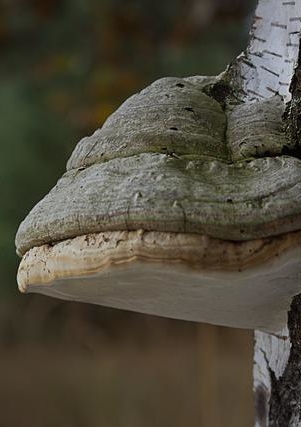
Appearance: The fruiting body formed by annual rings, which attaches to host trees in a hoof-like and inverted bracket-like manner, is typical of the tinder fungus.
The fruiting body has a woody, hard, upper crust in tones ranging from light gray to brown and is zoned by its growth rings.
If you run your finger over the cream-colored underside of the young fungus, dark traces remain.
Habitat: hardwood forests, preferably on beech, birch trees
Danger of confusion: Phellinus igniarius, Boletus laricis, Ganoderma adspersum
Toxicity: non-toxic
Warning: none
Ingredients: betulin, betulinic acid, coumarin, ergosterol peroxide, fomentation, fomentaric acid
Properties: antibacterial, anticarcinogenic, antifungal, antiviral, immune strengthening
Helps with: Asthma, cystitis, diabetes, hemorrhoids, infectious diseases, cancer, pneumonia
Plant uses
Cooking:
As an edible mushroom, the tinder fungus is no longer important today due to its woody consistency
and the bitter substances it contains.
Nevertheless, the mushroom was processed into liquors in the past.
Health:
Due to its wound-healing, anti-inflammatory, antibacterial, antiviral, and immunomodulatory attributions,
the tinder sponge has become the object of modern research.
All the effects traditionally attributed to it have since been confirmed.
Beauty:
None.