Chaga
Inonotus obliquus
The fungus has its origin in the Siberian tribe Khanty/Oystak.
They used the mushroom for medicinal purposes mainly in the form of a soap infusion.
This was made by burning pieces of chagas to ashes and dissolving them in water.
This soap water has a strong cleansing and disinfecting effect.
It was also used for external cleaning.
Name: Chaga, Inonotus obliquus
Other names: Siberian chaga mushroom
Family: Hymenochaetaceae
Harvest months: All year round
Usable plant parts: Fruiting bodies
Appearance:
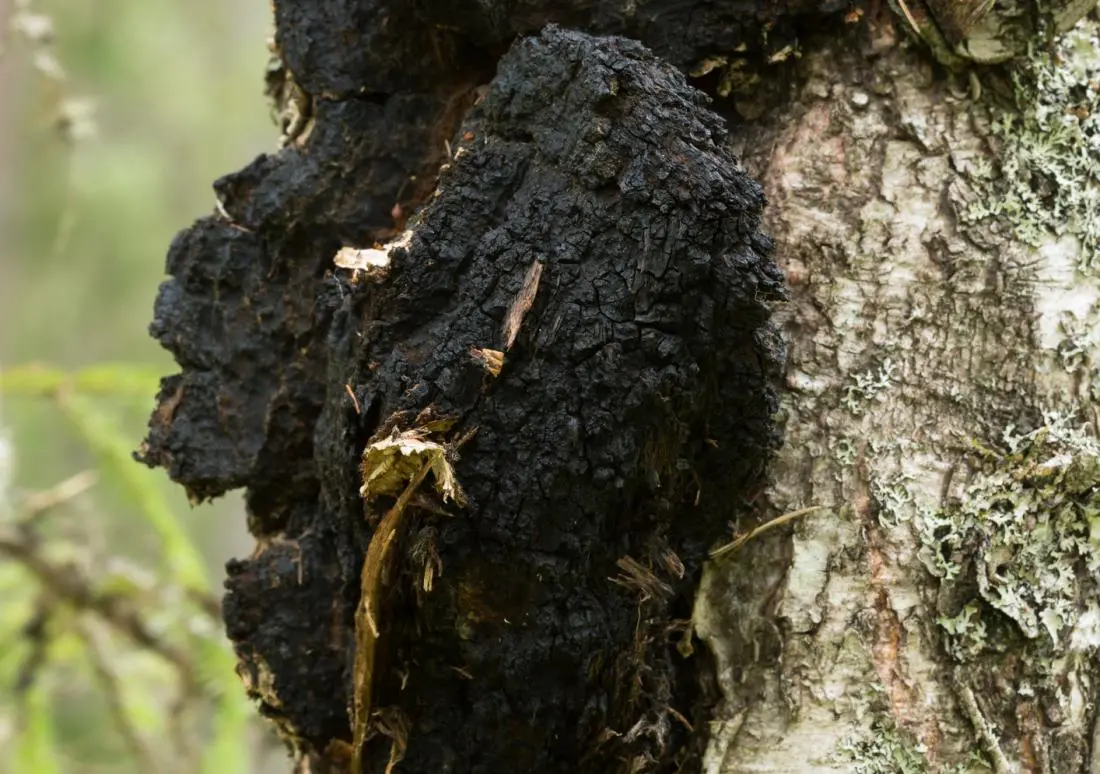
The fruiting body of Chaga can grow to a size of up to 40 centimeters in diameter.
When young, this is still hazel, but with age it becomes progressively darker until it is finally black.
The spores have a yellow-brown color.
The flesh of Chaga is fawn or reddish brown and often white veined.
Habitant: In Europe, North America and parts of Asia, almost exclusively on birch trees.
Risk of confusion: Multiform charcoal berry, tree canker
Toxicity: non-toxic
Warning: Chaga contains a high concentration of oxalates or oxalic acid. If consumed in excess, these can damage the kidneys and lead to kidney stones.
Ingredients: formic acid, B vitamins, beta-glucan, betulinic acid, iron, acetic acid, flavonoids, potassium, calcium, magnesium, manganese, sodium, organic acids, zinc
Properties: antibacterial, anticarcinogenic, antiviral, cholesterol-lowering, anti-inflammatory
Helps with: Hypertension, diabetes, diseases of the liver, immunodeficiency, cancer, gastrointestinal disorders
Plant uses
Cooking:
Inedible.
Health:
Chaga has been shown to have anti-inflammatory, anti-viral, and cholesterol-lowering effects.
Chaga is also said to be able to strengthen the immune system when taken regularly.
In Traditional Chinese and Traditional Japanese Medicine, the mushroom is currently administered to assist
with chemotherapy to alleviate negative side effects.
It can furthermore, regulate blood sugar in type 2 diabetes
Beauty:
None.