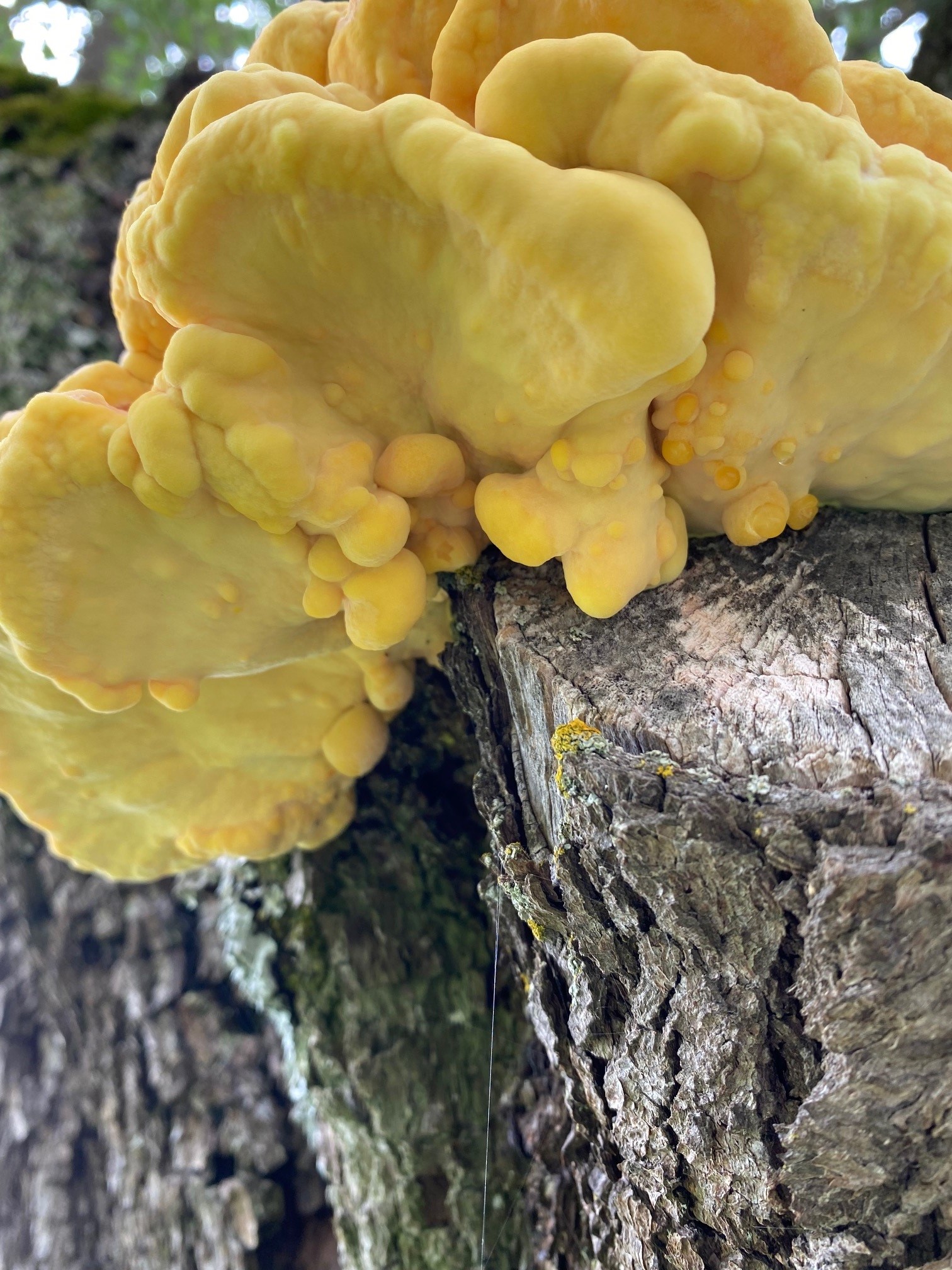
Chicken of the woods
Laetiporus sulphureus
The Chicken of the woods gets its name from the texture of its flesh, which is said to resemble cooked chicken.
Back in the days, people used to get rid of insects by burning this mushroom, because it contains lectin.
It's not only us that benefit from the Chicken of the woods.
The dark crevices created by the fungus offer a safe haven to insects,
such as rare beetles, bees and ants. Sometimes it even hosts small mammals like bats, owls, and other birds.
Name: Chicken of the woods, Laetiporus sulphureus
Other names: Sulphur shelf, Crab-of-the-woods, Sulfur polypore
Family: Polyporaceae
Harvest months: Jun - Oct
Usable plant parts: fruiting body
Appearance:
Fruiting body grows to 5 - 30cm and is orange, light yellow and white.
The tubes are yellow to old white
The flesh is thick, soft and very watery when young. It becomes tough, eventually crumbling away.
Habitat: On deciduous trees, spruces, firs.
Risk of confusion: giant polypore
Toxicity: non-toxic
Warning: May have gastrointestinal side effects, such as vomiting or fever.
Ingredients: Carbohydrates trehalose, mannitol, fructose, protein, six of the eight essential amino acids, , histidine, isoleucine, leucine, lysine, methionine, threonine, vitamin D, vitamin E, calcium, phosphorus, magnesium, sodium, potassium, iron
Properties: antioxidant, anti-inflammatory, immunomodulatory, anticancer, antidiabetic
Helps with: microbial infections, gastrointestinal disorders, diabetes, cardiovascular diseases, cancer
Plant uses
Cooking:
This mushroom is edible and has the faint flavor and texture of chicken. Hence the name.
It shouldn't be confused with hen-of-the-woods, which isn't closely related and also doesn't resemble chicken-of-the-woods.
Health:
It used to be used as a natural antibiotic and disinfectant. Nowdays, people use it to help with
stomach problems, stomach cancer and reuhmatic diseases.
Beauty:
None.