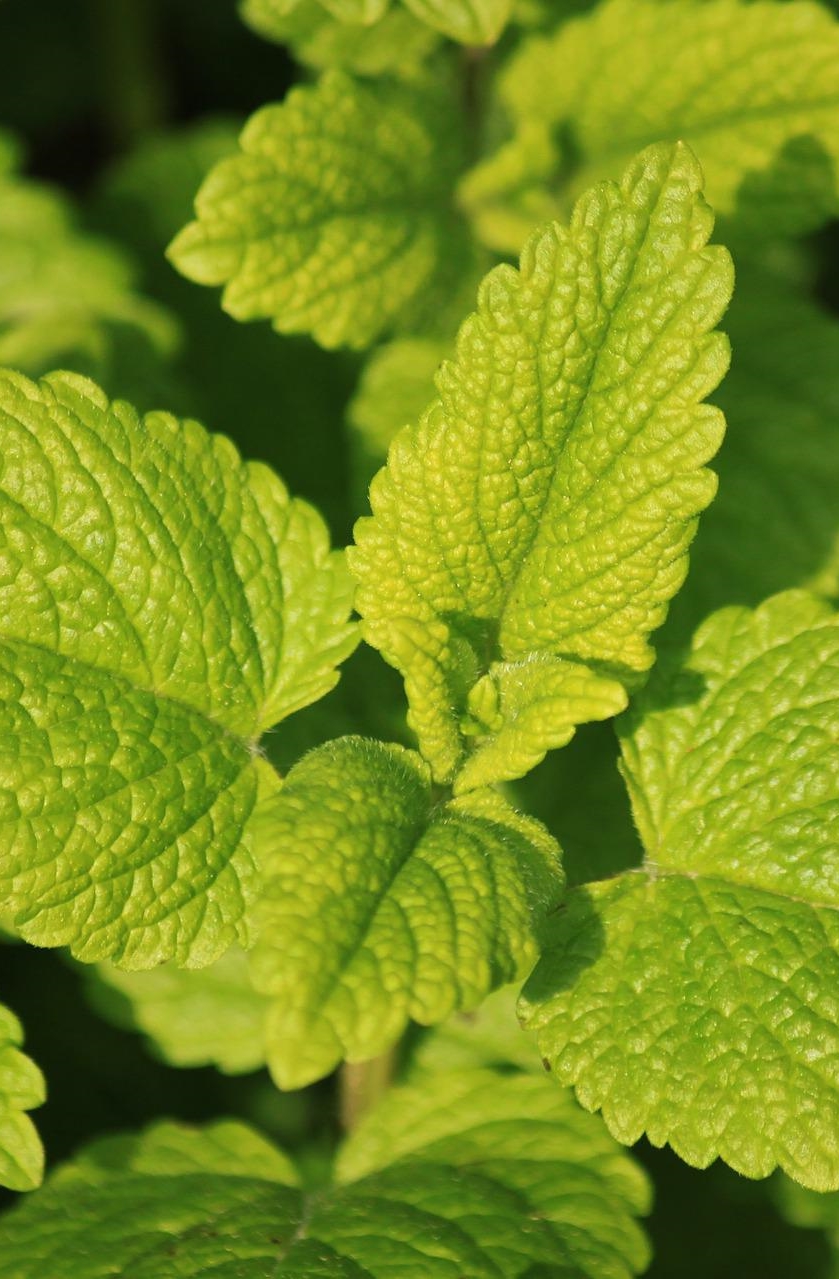
Lemon balm
Melissa officinalis
Lemon balm always has been associated with bees and beekeeping.
The Latin name Melissa officinalis was derived from the Greek word for honeybee.
Priests at temples dedicated to Artemis have planted the Lemon balm in great amounts
to keep the sacred honeybees content ad there existed a nymph named Melissa
who protected the bees in her groove.
In Turkey and Bulgaria, lemon balm is still planted around beehives to encourage the bees to stay,
rather than swarm elsewhere and new hives are often rubbed in with the plants leaves.
According to studies, the herb has many of the same chemicals that are found in bee pheromones which explains,
why they find them so irresistible.
Name: Lemon balm, Melissa officinalis
Other names: Garden balm, English balm, honeyflower, heartworm, bee's weed, lady's weed, bugleweed, motherwort, lemon herb
Family: Labiates (Lamiaceae)
Harvest months: May-Aug
Usable plant parts: Leaves, flowers, stems
Leaf shape: ovate
Flower color: white
Habitat: gardens
Risk of confusion: Quedlinburger Lemon Balm, which can be used similarly
Toxicity: non-toxic
Warning: none
Ingredients: essential oils, bitter substances, tannic acid, tannins, glycosides, resin, saponins, thymol
Properties: stimulating, antibacterial, uplifting, calming, relaxing, antifungal, antispasmodic, cooling, analgesic, diaphoretic, antiviral
Helps with: Anxiety, loss of appetite, abdominal pain, flatulence, colds, fevers, herpes, headaches, stomach cramps, menstrual cramps, nervousness, hyperthyroidism, sleep disorders, restlessness
Plant uses
Cooking:
Both the stems and fresh leaves of lemon balm have a subtly sweet and citrusy flavor
and can be used in food preparation and medicine.
The leaves work well with chicken and fish dishes.
Health:
The soothing scent helps to promote restful sleep and calms nervous disorders.
Additionally, it has a lot of antibacterial and antiviral properties.
Beauty:
Thanks to many antibacterial and antiviral properties, it is often used in face wash.